

Are Fireplace Doors Worth It? — Honest Answer (2026)
Short answer: Yes — for 90% of households with a wood-burning or gas fireplace. The 10% exceptions are vent-free gas inserts (which need open airflow) and pure-decoration installs (where heat doesn't matter). For everyone else, glass doors meaningfully cut heat loss up the chimney, prevent costly downdrafts, eliminate ember hazards, and add architectural finish to a black-hole opening. Payback period is typically 8-15 years on energy alone, with all the safety and aesthetic benefits as bonus.
The case FOR fireplace doors
1. Stop heat loss when fireplace is unused
An open fireplace is a chimney. When you're not actively burning a fire, that chimney pulls heated room air UP the flue at 4-8 cubic feet per minute by natural draft. Over a winter season in a cold climate (Zone 5-7: NY, MA, MN, MI, OH, etc.), that's $80-$200 in lost heating costs per year. Glass doors reduce this loss by 80-95% when closed.
2. Block downdrafts
High winds, atmospheric pressure inversions, and competing exhaust fans (kitchen hood, bathroom fan) can push cold outside air DOWN the chimney into your room. Many homeowners experience this as "cold pockets" near the fireplace even when the heating system is running. Closed glass doors block downdrafts entirely.
3. Prevent ember escape
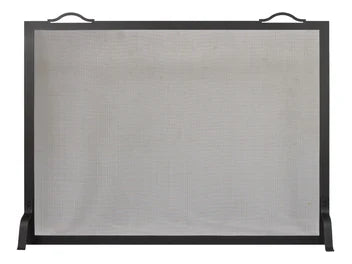
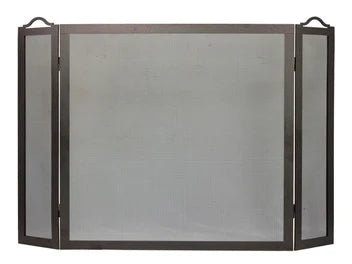
Burning seasoned hardwood is largely predictable. Pine, softwoods, and overly-dry firewood pop unpredictably. A glowing ember can hit your hearth, rug, or upholstery hours after the fire dies. Closed mesh or glass doors prevent it.
4. Block pests
Birds, bats, raccoons, squirrels, and insects use chimneys as access points. Glass doors block them at the firebox.
5. Architectural finish
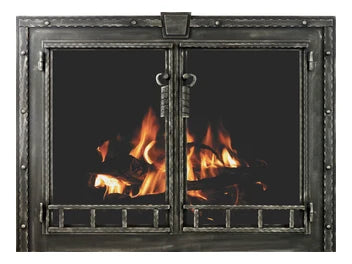
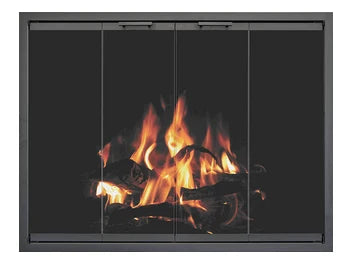
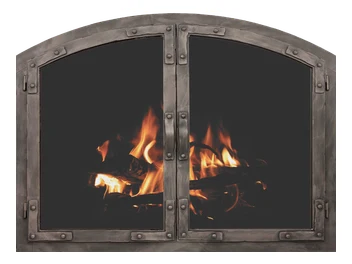
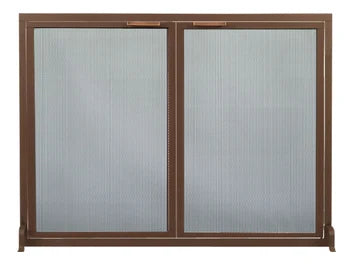
The unframed firebox opening is a black hole when the fire isn't lit. Glass doors with a finished frame (matte black, antique brass, forged iron) turn that black hole into a designed element of the room — even when cold. This is why interior designers virtually always specify doors on premium fireplace installs.
The case AGAINST fireplace doors
1. Vent-free gas inserts need open airflow
Vent-free gas log sets and inserts are designed to release combustion byproducts INTO the room (which is also why some jurisdictions restrict them — Minnesota and Wisconsin prohibit them, and California bars the sale of vent-free heaters). Adding glass doors creates safety risk by trapping byproducts. If you have a vent-free unit, skip doors.
2. You burn fires constantly with doors open anyway
Tempered glass doors must be opened during active burns (the proximity heat can crack tempered glass). If you literally never close your fireplace and use it as an active hearth 365 days/year, doors don't help much. Realistically: even active wood burners run 100-200 burn-hours per year out of 8,760 — doors close for 95% of the time.
3. Pure-decoration fireplace
If your fireplace is purely decorative (gas log set you never use, electric "fireplace" cabinet, faux fireplace), doors don't add value. They're an investment in actual fireplace function.
Payback math — when do doors pay for themselves?
Cold climate (Zone 5-7: NE, MW, mountain west)
- Annual heat loss savings: $100-$200 per heating season
- Quality custom door: $1,200
- Payback: 6-12 years on energy alone
Mild climate (Zone 3-4: PNW, mid-Atlantic, mid-South)
- Annual heat loss savings: $50-$100 per heating season
- Quality custom door: $1,200
- Payback: 12-24 years on energy alone
Warm climate (Zone 1-2: Southern CA, FL, TX coast)
- Annual heat loss savings: $20-$50 per heating season (limited heating days)
- Quality custom door: $1,200
- Payback: 24+ years on energy alone
- BUT: aesthetic + downdraft prevention often justify on non-energy grounds
The full payback math (energy + safety + aesthetic)
Add the avoided fire-risk, the avoided pest-removal calls, and the aesthetic value at resale, and for most US homeowners the doors justify themselves well before the energy-only math does.
Specific situations — should YOU get doors?
Active wood-burner in cold climate
YES. Highest payback case. Energy + safety + aesthetic all stack.
Vented gas logs in cold climate
YES. Vented gas logs lose heat up the chimney just like wood. Glass doors plug the leak.
Decorative fireplace, never lit
YES — for downdraft + pest blocking. Even unused fireplaces pull air and admit pests. Doors solve both.
Vent-free gas insert
NO. Vent-free systems need open airflow for safety. Don't add doors.
Sealed gas insert (with its own glass face)
NO — already sealed. The insert provides its own face. Doors would be redundant.
Wood stove insert (with its own door)
NO — already sealed. The stove provides its own door. Don't double up.
Frequently asked questions
Will doors really save me money on heating?
In cold climates, yes — a measurable reduction in heating bills during the months when the fireplace isn't actively burning. In warm climates, savings are minimal but other benefits (aesthetic, safety) usually still justify the purchase.
How long do glass fireplace doors last?
15-25 years for quality custom doors with proper care. Cheap big-box doors last 5-7 years before frame warping or finish chipping requires replacement.
Do doors reduce fire heat output to the room?
You should OPEN the doors during active burns (tempered glass can crack from extreme proximity heat). So no — doors don't reduce active-fire heat. They reduce heat LOSS when the fire isn't burning.
Will doors help with my drafty fireplace?
Yes — exactly the problem they solve. Closed doors block downdrafts during cold + windy conditions.
What about resale value?
Quality fireplace doors are a recognized home-improvement plus during resale, especially when the finish matches the room's hardware and style.
Ready to consider doors?
Browse all fireplace doors, read the complete custom doors guide, or call (949) 619-7824 to talk to a specialist.