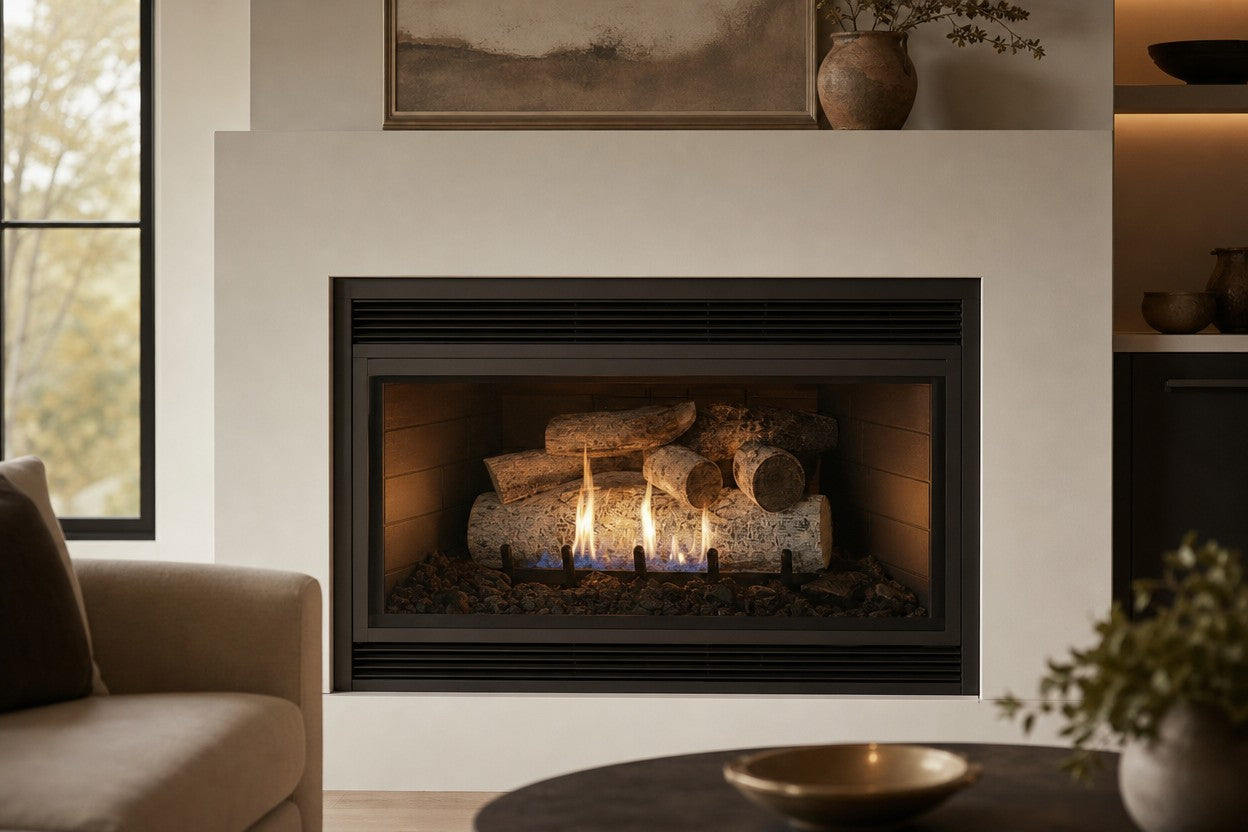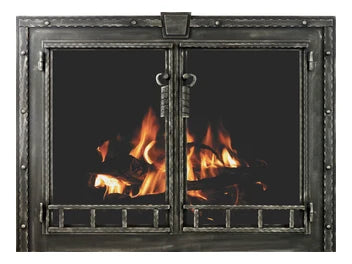
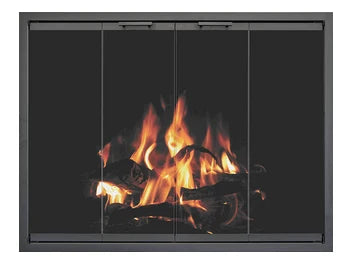
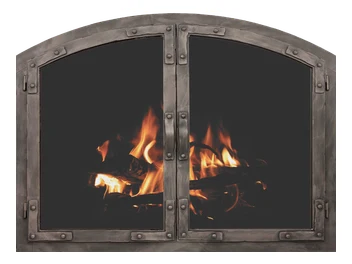

If you've started shopping for gas logs, you've already run into the question that stops most buyers cold: vented or ventless? It sounds like a small technical detail. It isn't. The choice decides how realistic your fire looks, how much your room actually warms up, whether your damper stays open or closed, and in a few states, whether you're even allowed to install one set over the other.
We build and fit fireplace products for a living, and we talk to homeowners every day who love one set and regret another for reasons no spec sheet warned them about. This guide walks you through the real trade-offs in plain language, defines the terms the first time they appear, and helps you land on the right answer for your fireplace, not a generic one.
The one-sentence answer
Choose vented gas logs if you want the most realistic, tall, lazy yellow flame and you have a working chimney you can keep open. Choose ventless gas logs (also called vent-free) if heat output and gas efficiency matter most, or if your fireplace can't vent. Everything below is about making that call confidently for your home.
First, a quick vocabulary check
- Vented logs burn with the chimney damper open, so combustion byproducts go up and out, just like a wood fire.
- Ventless (vent-free) logs burn cleaner and hotter with the damper closed, sending nearly all the heat into the room.
- Masonry fireplace = a traditional brick-and-mortar firebox with a real chimney.
- Prefab / zero-clearance fireplace = a factory-built metal firebox installed in framing. It looks like masonry but is built differently, and that affects what logs it's rated for.
- Damper = the metal flap inside the chimney throat that opens to let smoke out or closes to seal the flue.
Keep these in mind. The vented-versus-ventless decision hinges on them.
Flame realism: vented wins, and it isn't close
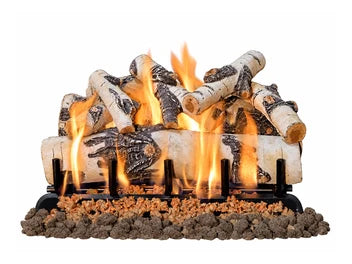
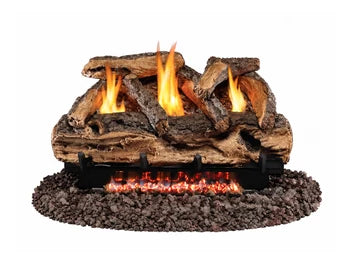
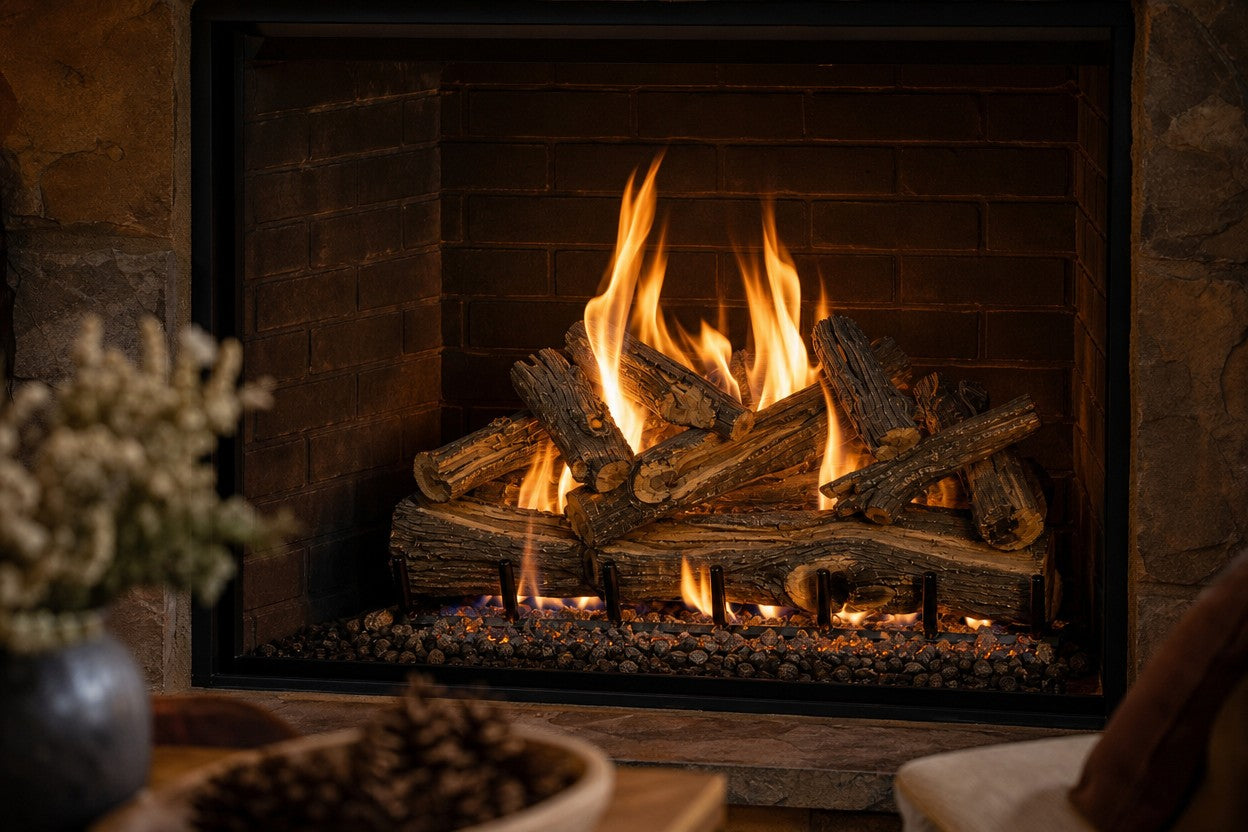
This is the reason most of our customers start here. Vented gas logs produce the tall, dancing, golden-yellow flame that genuinely fools the eye from across the room. Because the burner doesn't have to burn perfectly clean (the chimney carries off the small amount of soot), the flame can curl up and through the logs the way real wood fire does.
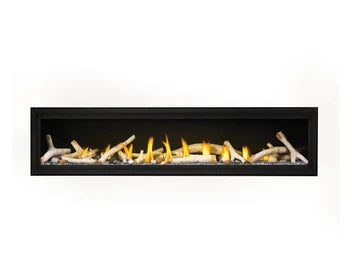
Ventless logs are required by design to burn extremely clean so nothing harmful enters your room. That clean burn means a shorter, bluer, more controlled flame and a more deliberate flame pattern. Modern ventless sets look far better than they did a decade ago, but if "I want it to look like a real wood fire" is your top priority, vented is the honest recommendation.
Heat and efficiency: ventless wins by a wide margin
Here's the trade-off in the other direction. A vented set sends most of its warmth straight up the open chimney, the same place the realistic flame comes from. Vented logs are primarily about ambiance, not heating a room.
Ventless logs are close to 99% efficient because the damper stays closed and the heat stays in the room. A ventless set can genuinely take the chill off a living space and meaningfully lower what you spend on heat. If you want your fireplace to do a job on a cold evening, ventless is the efficient choice.
One comfort note buyers rarely hear: because ventless burns inside a sealed room, some people notice a faint odor on the first few uses (it burns off) and slightly more humidity in the air. In a tight, well-insulated home that humidity is usually welcome in winter; in an already-damp room it's worth considering.
Does your fireplace even have a choice? Start with the chimney
Before preference, check capability. Vented logs require a working chimney and a damper you can keep open. No real flue, no vented logs, full stop.
- Working masonry chimney: You can run either type. Decide on look versus heat.
- Prefab / zero-clearance firebox: Check the manufacturer's rating. Many prefabs are approved for vented logs only. Ventless in a prefab depends on the unit, so verify before you buy.
- No chimney, or a permanently sealed flue: Ventless is your path (where legal, more on that below), since it's designed to run with the flue closed.
If you're not sure which firebox you own, this is exactly the kind of thing our team checks for you before you order. More on that in a moment.
Safety sensors: what ventless includes that vented doesn't
This is where buyer fear peaks, so let's be direct. Because ventless logs burn in a closed room, every code-compliant ventless set sold in the US includes an Oxygen Depletion Sensor (ODS). The ODS continuously monitors oxygen in the room and automatically shuts off the gas if oxygen dips below a safe level. It is a proven, decades-old safety system, and it is not optional equipment.
Best practice with any ventless set: pair it with a carbon monoxide detector in the room, size the set to the room (an oversized ventless set in a small, sealed room is the scenario to avoid), and follow the manufacturer's room-volume guidance. Do that, and ventless is a safe, code-recognized appliance used in millions of homes.
Vented logs, burning up an open chimney, don't rely on an ODS because the byproducts leave the house. Their main safety rule is simpler: the damper must stay open whenever they're burning. Many vented installations include a damper clamp so it can't be accidentally closed.
State and local rules: check before you fall in love with a set
Vent-free appliances are legal in most of the United States, but not everywhere. California heavily restricts ventless gas products, and some municipalities and HOAs add their own limits. Massachusetts and a handful of local jurisdictions also have restrictions or special requirements.
Because we're based in Laguna Hills, California, we deal with these rules constantly, and we'll tell you plainly if ventless isn't an option where you live. Vented logs are legal everywhere a working chimney exists, which is one more reason they remain the default for traditional masonry fireplaces. When in doubt, confirm with your local building department before ordering.
Vented vs ventless at a glance
- Most realistic flame: Vented
- Most heat / best efficiency: Ventless
- Needs a working open chimney: Vented (yes) / Ventless (no)
- Built-in oxygen safety sensor: Ventless (ODS standard)
- Legal everywhere: Vented (yes) / Ventless (check your state)
- Best for ambiance: Vented
- Best for actually warming a room: Ventless
Don't forget: vented and ventless are sized and fueled differently
Two more things that catch buyers off guard. First, logs are sized to your firebox, measured front width, back width, and depth, so a set that looks perfect online can be wrong for your opening. Second, you'll choose a fuel type: natural gas (piped to your home) or liquid propane (tank). These aren't interchangeable, and the burner and orifice differ. Getting both right is the difference between a fireplace you love and a return.
Our gas log configurator walks you through firebox measurements, vented versus ventless, fuel type, and ignition (match-lit versus a remote-ready system) step by step, so you can't accidentally order a mismatched set.
How to choose, in three questions
- Do I have a working chimney I can keep open? No → ventless (if legal). Yes → keep going.
- What matters more, the most realistic flame or real heat in the room? Flame → vented. Heat → ventless.
- Is ventless legal and practical where I live and for my room size? If anything's uncertain, have it reviewed before you order.
Frequently asked questions
Can I switch a vented fireplace to ventless logs later?
Sometimes, but only if your firebox is rated for ventless and you meet room-size and clearance rules. Verify the rating first, this is a great question for our Expert Fit Review.
Do ventless logs smell?
A faint odor can appear during the first few burns as manufacturing residue burns off, then fades. A lingering strong odor means the set needs adjustment or service.
Which is cheaper to run?
Ventless, by a clear margin. Nearly all the heat stays in the room, so you get more warmth per cubic foot of gas.
Is ventless safe to sleep near or leave unattended?
Follow the manufacturer's guidance, most recommend not running ventless sets unattended or overnight, and always pair with a CO detector. The built-in ODS adds an automatic shutoff for low oxygen.
Still unsure? Let an expert confirm the fit before you buy
The fastest way to remove the risk from this decision is to let us look at your fireplace. Send your firebox measurements and a photo, and our team will confirm whether your fireplace supports vented, ventless, or both, flag any local code issues, and recommend a correctly sized set, before you spend a dollar. That's our Expert Fit Review, and it's why our customers order with confidence instead of crossed fingers.
When you're ready, build your set in the configurator and we'll handle the rest.