
Hauling wood, sweeping ash, coaxing damp logs to light — at some point most wood-fireplace owners ask the same question: can I just switch this thing to gas? Yes, you almost certainly can, it's one of the highest-satisfaction upgrades in the hearth world, and it's far less invasive than people expect. Here's the whole project, step by step, with honest costs and the decisions that actually matter.
The short answer
If you have a working wood-burning fireplace (masonry or prefab) and gas service to your home, converting to gas logs means: running a gas line to the firebox (a licensed plumber's job), choosing a vented or ventless log set sized to your firebox, and having it connected. Typical all-in cost runs $800–$3,000 — the log set is usually $500–$1,500 and the gas line $300–$1,000+ depending on the run. Most conversions are done within a week of the set arriving.
Step 1 — Confirm what fireplace you have
Brick firebox with mortar joints and a real chimney = masonry. Metal box with visible seams and a manufacturer label = prefab / zero-clearance. Both can take gas logs, but prefab fireboxes have stricter ratings — check the metal plate inside for what the unit allows. Two-minute test: masonry vs prefab, which do I have?
Step 2 — Vented or ventless: the decision that shapes everything
Vented gas logs burn with the damper open and give the tall, golden, wood-like flame — the choice when looks come first. Ventless burn ultra-clean with the damper closed and push nearly all their heat into the room — the choice when heating matters, but they're not permitted in California and some other jurisdictions. The full decision guide: vented vs ventless gas logs. Not sure what your county allows? Ask us — we check this daily.
Step 3 — Get the gas line in
This is the one part you don't DIY. A licensed plumber runs a line (natural gas from your meter, or propane from your tank) to a stub-out in the firebox — usually entering through the floor or side wall. Cost scales with distance and access: a short run from a nearby line can be a few hundred dollars; crossing the house, more. Book this in late summer — plumbers' calendars fill fast when the first cold week hits.
Step 4 — Measure your firebox
Four numbers: front width, back width (fireboxes taper), depth, and height. The set should sit with a few inches of clearance at the sides — and leave room for the control valve or remote receiver, typically on the right. Our gas-log order forms filter sizes against your measurements, so you can't pick a set that won't fit.
Step 5 — Choose your log set
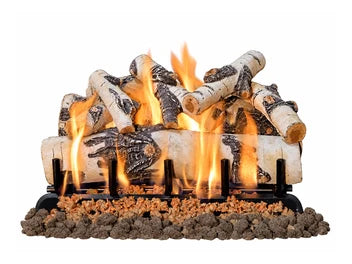
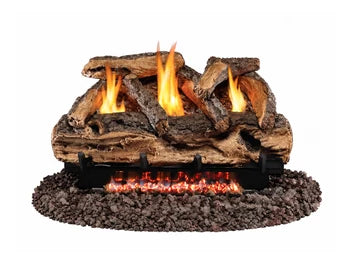
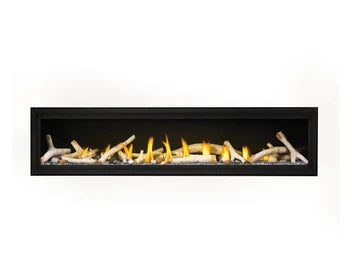
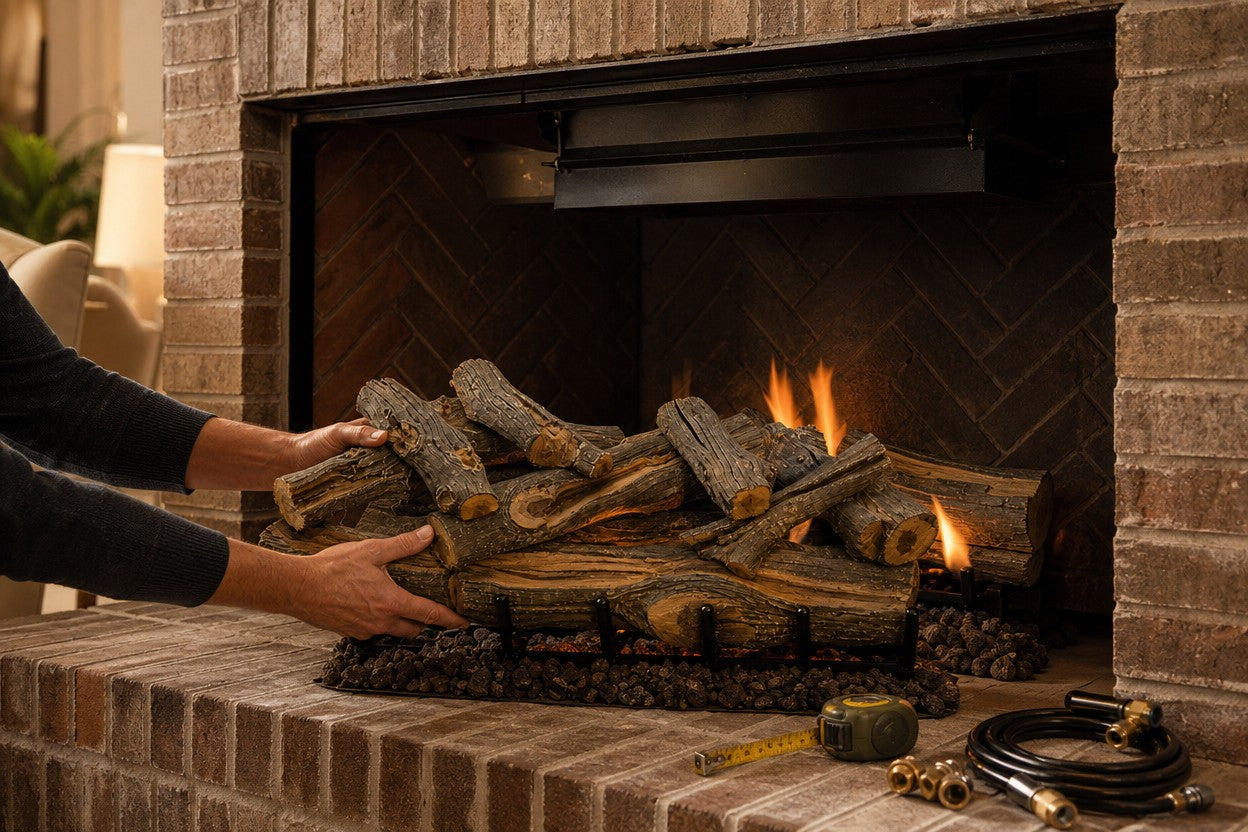
This is the fun part. Style is personal — split oak, charred driftwood, birch, contemporary — but quality shows up in the details: hand-painted ceramic logs, realistic ember beds, burners engineered for full flames. Browse by type: vented gas logs · ventless gas logs · or the whole gas log collection with Real Fyre, Grand Canyon and Hargrove sets in every size from 16″ to jumbo 60″+.
Step 6 — Pick the ignition
Match light is the simplest and cheapest (vented only — light it with a long match). Safety pilot adds a standing pilot and control knob. Millivolt works with a remote or wall switch. Electronic ignition skips the standing pilot for the best efficiency. If you'll use the fireplace often, remote-capable ignition is the upgrade people thank themselves for every winter evening.
Installation day and the first burn
Log placement follows the manufacturer's diagram exactly — logs positioned wrong can flame-impinge and soot. For vented sets, code requires the damper be fixed open (a simple damper clamp, usually included). The first hour of burning may smell as manufacturing residues burn off; crack a window and let it pass. After that: fire at the push of a button, zero ash, no 6 AM wood runs.
What the whole project costs
Realistic 2026 numbers: quality log set $500–$1,500 (jumbo and see-through sets more) · gas line $300–$1,000+ · optional plumber hookup of the set $150–$400 · optional permit where required, usually under $100. Compare that with $200–$400 a year for cordwood plus chimney sweeping, and the convenience math usually settles it.
Frequently asked questions
Do I lose the ability to burn wood?
Practically, yes while the logs are installed — but the conversion is reversible. Remove the set and cap the line, and your wood fireplace is back.
Do I need a permit?
Gas line work usually requires one (your plumber handles it). The log set itself typically doesn't — but rules vary by city; we're happy to point you to what applies.
Can I install the log set myself?
Placing the logs per the diagram — yes. Connecting gas — leave it to a licensed pro. It's a quick job for them and it keeps your insurance clean.
Will gas logs heat my room?
Ventless sets genuinely heat (that's their point). Vented sets are primarily ambiance — beautiful fire, most heat up the flue. Choose by what you want the fireplace to do.
What if my chimney is damaged?
Ventless sets don't use the chimney, so they're often the answer for fireplaces with flue problems — after an inspection confirms the firebox itself is sound.
Ready to make the switch?
Send a photo of your fireplace to the AI Fireplace Expert for instant sizing help, or call (949) 619-7824 — we'll confirm the right set, size and ignition for your firebox before you spend a dollar. Every order ships free with expert review included.
Related guides & collections
- Real Fyre gas logs — full catalog
- Grand Canyon gas logs
- Vented vs ventless gas logs — how to choose
- Masonry vs prefab — which fireplace do I have?
- All gas logs · vented · ventless
- Custom fireplace doors (pair beautifully with a new gas set)